


Any2Text is a practical choice for short, one-off audio or video transcription. This guide compares Any2Text with seven top tools to transcribe audio to text for longer uploads, speaker labels, live meeting capture, transcript-based media editing, team review, and human-verified accuracy. The right option depends on your file length, workflow, privacy requirements, and budget.
Quick Answer
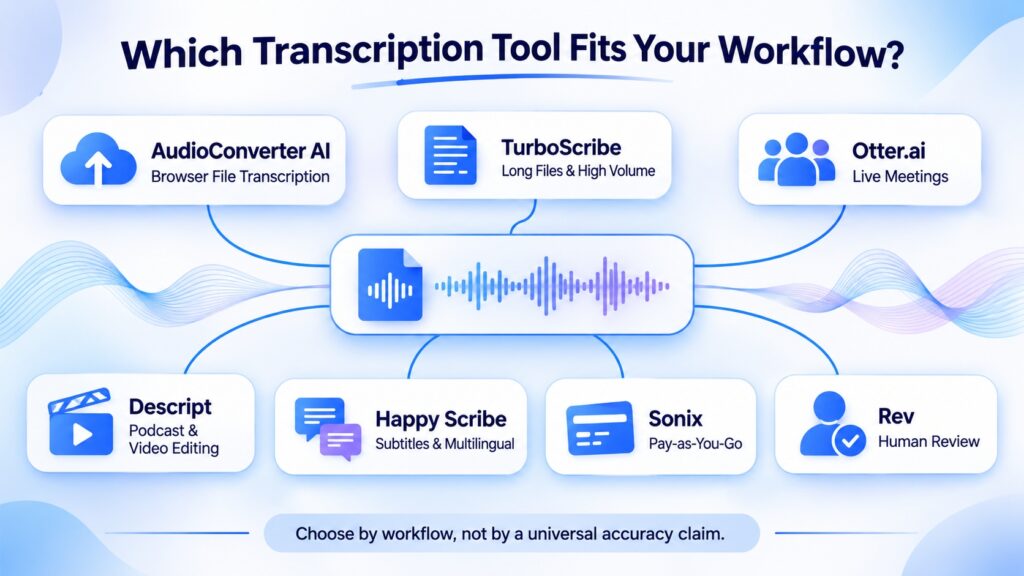
- Best browser-based alternative for uploaded files: Audio Converter AI
- Best for high-volume individual transcription: TurboScribe
- Best for live meetings: Otter.ai
- Best for editing podcasts and videos: Descript
- Best for subtitles and multilingual workflows: Happy Scribe
- Best pay-as-you-go editor: Sonix
- Best when human review matters: Rev
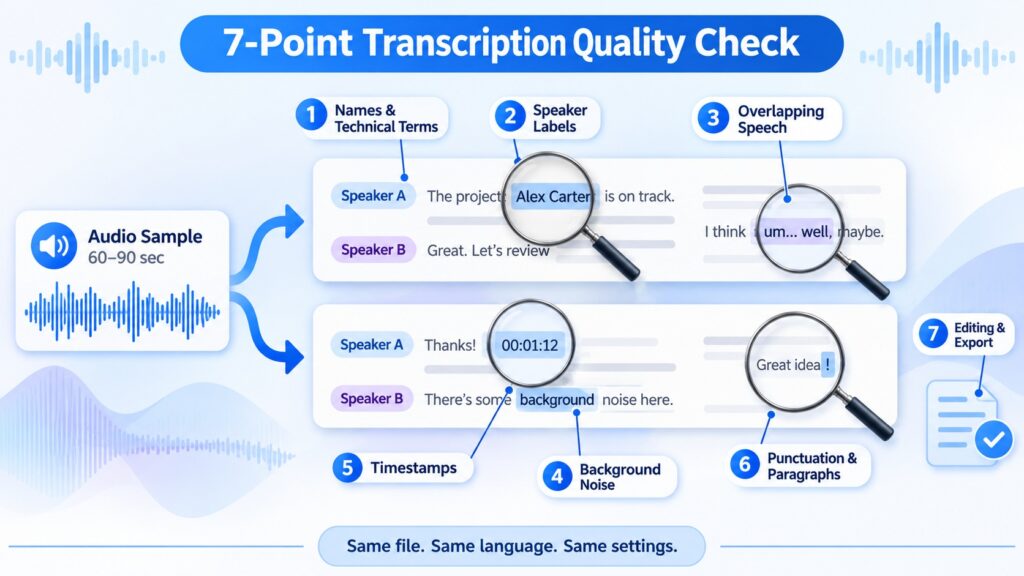
No tool is the most accurate in every condition. Vendor accuracy percentages are not directly comparable because each company may use different files, languages, models, and scoring methods. For a meaningful decision, run the same representative recording through your top two choices and compare the resulting corrections.
Top Alternatives to Any2Text: Best Tools to Transcribe Audio to Text 2026
| Tool | Best for | Free use | Entry pricing* | Speaker labels | Main limitation |
| Any2Text | Short, occasional file transcription | First 15 minutes of a file | $0.035/min or $19.99/month for 3,000 minutes | Multiple-speaker handling is stated; labeling details are not clearly documented | Limited collaboration and workflow features |
| Audio Converter AI | Browser-based audio and video transcription | Up to 30 transcription minutes/day | From $4.49/month with annual billing | Yes | Not a live meeting bot or human transcription service |
| TurboScribe | Long files and high-volume personal use | 3 files/day, up to 30 minutes each | $10/month annually or $20 monthly | Yes | Fewer live-meeting and team-workspace features |
| Otter.ai | Live meeting notes and searchable conversations | 300 minutes/month; 3 lifetime file imports | From $8.49/user/month annually | Yes | Free file imports are tightly limited |
| Descript | Podcast and video editing from a transcript | 60 media minutes/month | From $16/month annually | Yes | More software than needed for a plain transcript |
| Happy Scribe | Multilingual subtitles, translation, and collaboration | 10-minute AI trial | From $8.50/month annually | Yes | Useful file-transcription volume is mainly paid |
| Sonix | Multilingual file transcription with an editor | 30-minute trial | $10/hour pay as you go | Yes | Not designed primarily as a live meeting assistant |
| Rev | AI drafts plus optional human transcription | No general free tier listed for per-minute services | AI from $0.25/min; human from $1.99/min | Yes | Human review becomes expensive at scale |
*Prices and allowances are based on official public pages checked November 4, 2026. Taxes, promotions, annual billing, and plan changes can affect the final cost.
What Is Any2Text?
Any2Text is an online transcription service that converts uploaded audio and video into editable text. According to the Any2Text website, it supports more than 50 languages, accepts common audio and video formats, retains timestamps, and exports TXT, DOCX, XLSX, or SRT files.
Its pricing is straightforward for occasional use: the first 15 minutes of a file are free, followed by pay-as-you-go transcription at $0.035 per minute. A Premium plan is also listed at $19.99 per month for 3,000 minutes.
What Any2Text Does Well
- It provides a simple upload-to-transcript workflow.
- The free 15-minute allowance makes it easy to test a representative file.
- Users can edit the transcript before export.
- It accepts both audio and video.
- DOCX, XLSX, TXT, and SRT cover common document and subtitle workflows.
- Pay-as-you-go pricing can be economical for occasional files.
Where Any2Text Becomes Less Convenient
Any2Text focuses primarily on file conversion. Its public product page describes AI templates and translation, but it does not present the same depth of live meeting capture, transcript-based media editing, team permissions, or human review offered by some alternatives.
Some product details are also less explicit than on competitors' documentation. For example, the site says it handles multiple speakers, but it does not clearly explain how speaker labeling works in the final transcript. That should be treated as “not publicly stated,” not proof that the feature is unavailable.
Any2Text is a good fit if: you have an occasional recording, want a quick editable transcript, and prefer per-file pricing.
Consider an alternative if: you routinely process long files, need a meeting assistant, edit media through text, collaborate with a team, or require a human-reviewed final transcript.
How We Compared Any2Text With the Top Tools to Transcribe Audio to Text
This guide compares publicly documented product capabilities rather than assigning a universal accuracy score. We reviewed each tool across six criteria:
- Input workflow: uploaded files, browser recording, or live meetings.
- Free allowance and pricing: using official pricing available on November 4, 2026.
- Transcript workflow: editing, timestamps, speaker labels, search, and collaboration.
- Output options: text, document, caption, or subtitle exports.
- Best-fit use case: occasional files, meetings, media production, multilingual work, or high-stakes transcription.
- Important limitation: the situation in which another tool would make more sense.
We did not convert vendor accuracy claims into a ranking. Accuracy varies with background noise, microphone distance, overlapping speakers, names, technical vocabulary, accents, and language. If accuracy is central to your decision, create a short reference transcript and calculate the number of corrections each output requires.
1. Audio Converter AI: Best Browser-Based Alternative for Uploaded Files
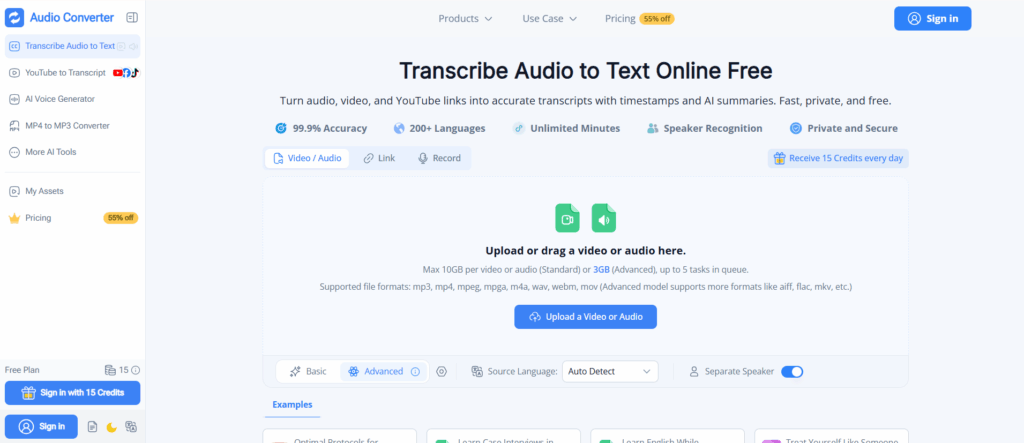
Audio Converter AI is the most direct alternative in this list for users who want to upload audio or video, generate editable text, separate speakers, and continue working in a browser. It also includes AI notes, chat, mind maps, translation, and batch processing on supported plans.
The current pricing page lists a free plan with 15 daily credits, equivalent to up to 30 minutes of transcription per day. It also lists speaker recognition, five-file batch processing, and plan-dependent storage and file limits. Paid plans begin at $4.49 per month with annual billing at the time of review.
Why Choose It Over Any2Text?
- A recurring daily free allowance can suit users who transcribe smaller files regularly.
- Speaker recognition is explicitly included.
- AI notes, chat, and mind maps can reduce the work required after transcription.
- Batch processing is available for up to five audio or video files at once.
- It supports both uploaded files and browser recording.
Important Limitation
Audio Converter AI is built around uploaded and recorded files. It is not the strongest choice if you specifically need a calendar-connected bot that automatically joins Zoom, Microsoft Teams, or Google Meet. It also does not replace a professional human transcription service for legal, medical, or publication-critical work.
Best for: students, researchers, creators, and professionals who want a browser-based way to transcribe audio to text and then summarize or reuse the result.
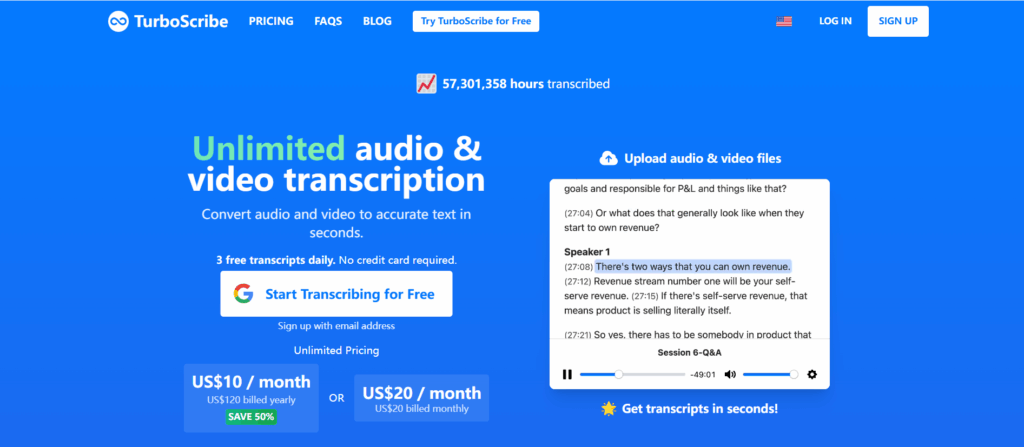
2. TurboScribe: Best for High-Volume Individual Transcription
TurboScribe is aimed at people with a large backlog of audio or video files. Its free plan permits three transcripts per day, with each file limited to 30 minutes. The Unlimited plan costs $10 per month when billed annually or $20 on monthly billing.
The paid plan allows files up to 10 hours or 5 GB and supports uploading up to 50 files at once. TurboScribe also documents speaker recognition, more than 98 transcription languages, translation into more than 130 languages, and exports including DOCX, PDF, TXT, CSV, SRT, and VTT.
Why Choose It Over Any2Text?
- The paid plan is structured for frequent, high-volume individual use.
- Ten-hour file limits suit lectures, interviews, hearings, and long-form video.
- Bulk uploading and exporting reduce repetitive work.
- Speaker recognition and audio restoration are available.
- Flat subscription pricing is easier to predict than per-file billing at high volume.
Important Limitation
TurboScribe is primarily a file transcription service. Teams that need detailed permissions, shared review workflows, a meeting bot, or optional human transcription may find Happy Scribe, Otter.ai, Sonix, or Rev more suitable.
Best for: one person processing many long files each month.
3. Otter.ai: Best for Live Meetings
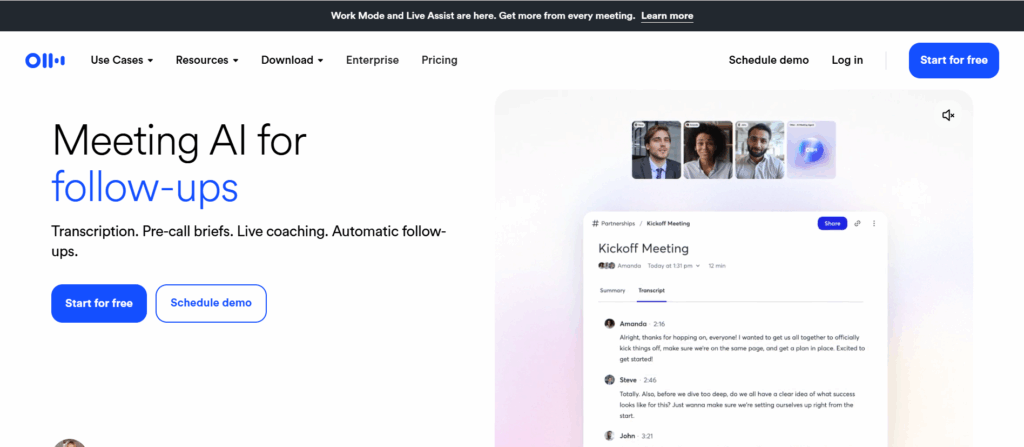
Otter.ai is a meeting-focused platform rather than a simple upload-and-download converter. It can capture live conversations, identify speakers, generate summaries, and connect with Zoom, Microsoft Teams, and Google Meet.
The Otter pricing page lists 300 transcription minutes per month on the Basic plan, but imported files are limited to three for the lifetime of the free account. Pro includes 1,200 in-app recording minutes and ten monthly imports, with annual pricing listed from about $8.49 per user per month when checked.
Why Choose It Over Any2Text?
- It can transcribe live meetings instead of waiting for an uploaded recording.
- Meeting summaries, AI chat, and searchable conversation history are central features.
- Calendar and video-conferencing integrations reduce manual setup.
- Web, desktop, iOS, and Android options support work across devices.
- Speaker identification is built for recurring conversations.
Important Limitation
Otter's free plan is generous for live recording minutes but restrictive for imported files. It is also designed around meetings, so people working mainly with large collections of podcasts, lectures, or prerecorded video may prefer a file-first service.
Best for: teams, managers, interviewers, and students who need live notes and searchable meeting records.
4. Descript: Best for Editing Podcasts and Videos Through Text
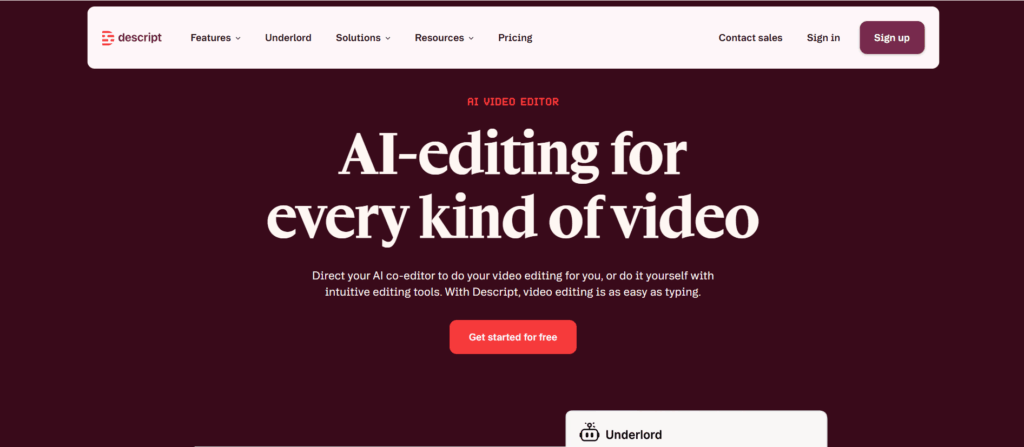
Descript treats a transcript as part of the media-editing timeline. Delete text and the corresponding audio or video is removed; rearrange the transcript and the media follows. This makes it substantially different from Any2Text's file-to-document workflow.
The Descript pricing page lists 60 media minutes per month on the free plan. Paid plans begin with Hobbyist at $16 per person per month on annual billing, or $24 monthly. Descript currently documents transcription in 25 languages and can detect more than eight speakers.
Why Choose It Over Any2Text?
- Text-based editing connects the transcript directly to the source media.
- Studio Sound, filler-word removal, captions, screen recording, and clip creation support production work.
- A transcription glossary can improve recurring names and terminology.
- Speaker detection helps organize interviews and group recordings.
- Creators can move from transcript to edited media without switching products.
Important Limitation
Descript is unnecessary complexity if you only want a clean TXT, DOCX, or SRT file. Its pricing and media-minute model make more sense when the editing workflow is valuable, not when transcription is the only task.
Best for: podcasters, YouTubers, video editors, and content teams.
5. Happy Scribe: Best for Subtitles and Multilingual Workflows
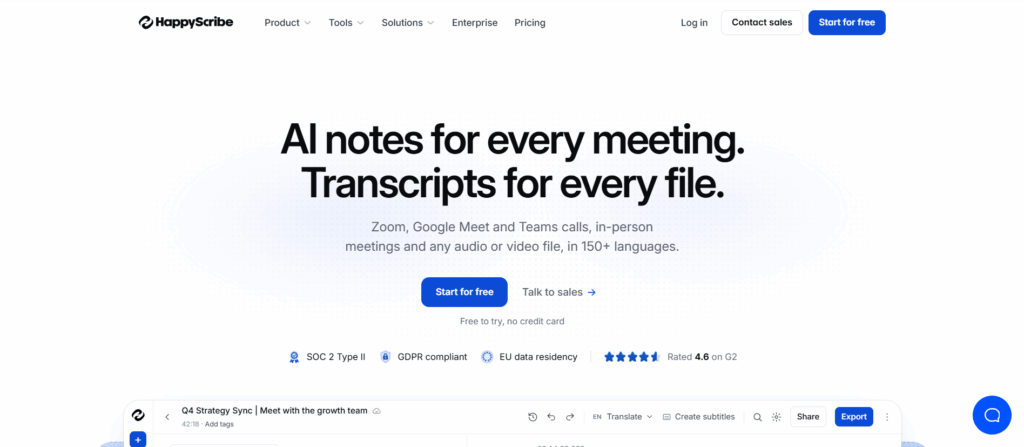
Happy Scribe combines transcription, subtitles, translation, meeting capture, collaboration, and optional human proofreading. Its range of export formats and subtitle controls make it especially useful when a transcript will be published with video.
The Happy Scribe pricing page lists a 10-minute trial for uploaded AI transcription, subtitling, and translation. Basic starts at $8.50 per month with annual billing and includes 120 minutes per month. The company documents AI transcription and subtitles in more than 150 languages and dialects, automatic speaker detection, and human proofreading from $2 per minute.
Why Choose It Over Any2Text?
- It provides a mature subtitle and translation workflow.
- Teams can edit transcripts collaboratively and add comments or highlights.
- More than 15 export formats are available on higher plans.
- Optional human proofreading is available when an AI draft is not sufficient.
- Integrations include YouTube, Vimeo, Google Drive, Box, and Dropbox.
Important Limitation
The free uploaded-file allowance is a trial rather than an ongoing monthly transcription allocation. Users with large volumes should calculate the included minutes and top-up rate before choosing a plan.
Best for: multilingual creators, subtitle teams, educators, and organizations that sometimes require human review.
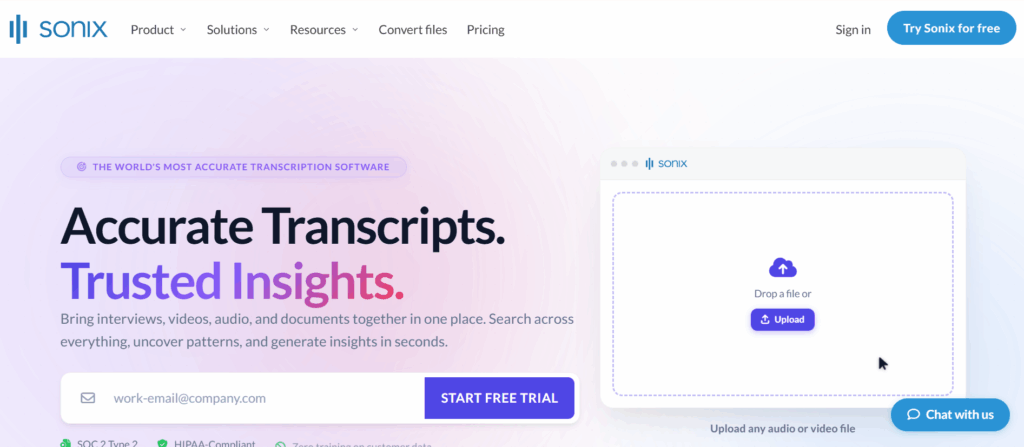
6. Sonix: Best Pay-As-You-Go Transcript Editor
Sonix offers automated transcription, translation, subtitles, and a browser-based transcript editor. It supports more than 54 languages and accepts more than 40 audio and video file types.
The Sonix pricing page includes a 30-minute free trial and a $10-per-hour pay-as-you-go plan. Current subscriptions start at $25 per month for five hours, while higher plans add more included hours, collaboration, search, permissions, speaker voiceprints, and advanced security options.
Why Choose It Over Any2Text?
- Pay-as-you-go pricing remains available for occasional projects.
- The in-browser editor synchronizes text with the source media.
- Translation, subtitles, and multiple export formats are part of the same workflow.
- Subscription plans add team review and organization features.
- The pricing model is documented by the hour and prorated to the second.
Important Limitation
At $10 per hour, Sonix costs more than Any2Text's $0.035-per-minute pay-as-you-go rate for a simple one-off file. Its value comes from the editor, multilingual workflow, subtitles, and team features—not from being the cheapest basic converter.
Best for: researchers, agencies, and multilingual teams that need an editor and predictable pay-as-you-go billing.
7. Rev: Best When Human Review Matters
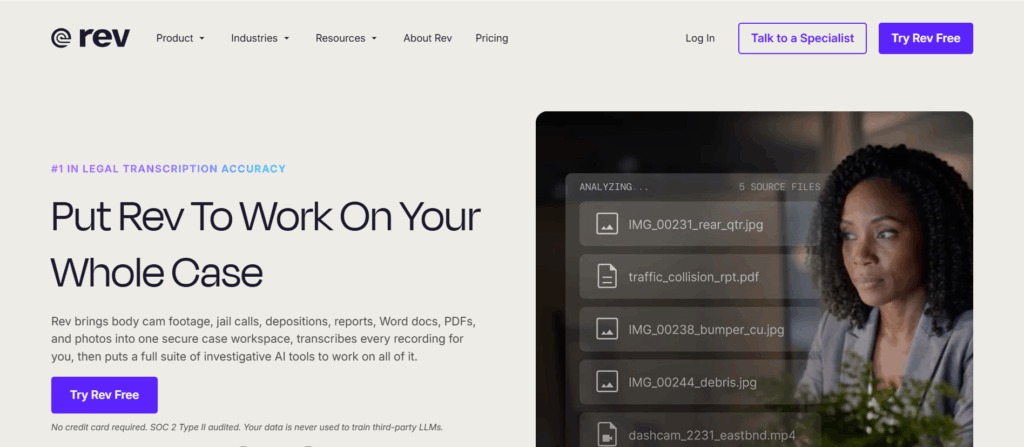
Rev offers both AI transcription and human transcription. That distinction matters when the output will be quoted, published, filed, or used in a high-stakes workflow.
According to Rev's official pricing documentation, AI transcription starts at $0.25 per minute and standard human transcription starts at $1.99 per minute. Rev states that its human service guarantees 99% accuracy for clear audio and provides DOCX, PDF, and TXT downloads.
Why Choose It Over Any2Text?
- Users can choose between a fast AI draft and a human-produced transcript.
- Human transcription handles accents, multiple speakers, and difficult audio without a separate vendor.
- Timestamps, verbatim transcription, rush delivery, and premium review can be added.
- Rev provides specialized options for legal transcripts and captions.
- An interactive editor is available after processing.
Important Limitation
Human review is much more expensive than automated transcription. A 60-minute recording starts around $119.40 at the published $1.99-per-minute rate, before optional add-ons. It should be reserved for work where the cost of an incorrect transcript is higher than the review fee.
Best for: legal teams, publishers, journalists, researchers, and organizations that require a documented human review layer.
Pricing Reality Check: What Does One Hour Cost?
The following calculations use each company's published per-minute or per-hour rate. They exclude subscriptions, promotions, taxes, add-ons, and minimum charges.
| Service | Published usage rate | Calculated cost for 60 minutes |
| Any2Text pay as you go | $0.035/min | $2.10 |
| Sonix pay as you go | $10/hour | $10.00 |
| Happy Scribe additional AI credits | $0.20/min | $12.00 |
| Rev AI transcription | $0.25/min | $15.00 |
| Rev human transcription | $1.99/min | $119.40 |
This table does not mean the cheapest service provides the best transcript. It shows why users should compare workflow costs as well as transcription prices. A more expensive editor may save cleanup time, while a human-reviewed service may reduce risk in situations where errors carry real consequences.
How to Choose the Right Tool to Transcribe Audio to Text
1. Start With the Source Material
A meeting, podcast, lecture, legal deposition, and multilingual video create different requirements. Live meetings benefit from automatic capture and summaries; media production benefits from transcript-based editing; high-stakes documents may require human review.
2. Test Your Most Difficult Recording
Do not evaluate transcription software using a perfect studio sample. Use a file with the accents, technical vocabulary, room echo, background noise, and number of speakers you normally encounter. Compare proper nouns, speaker changes, punctuation, and the total number of corrections.
3. Calculate the Complete Workflow Cost
Include more than the advertised subscription price. Check included minutes, file limits, extra-minute charges, user seats, translation, exports, storage, and the time required to clean the transcript.
4. Check How Your Files Are Handled
Confidential interviews, internal meetings, research data, and client recordings may require encryption, retention controls, access permissions, deletion options, or formal compliance documentation. If a company does not publicly state a security feature, record it as unverified and ask before uploading sensitive material.
5. Review the Output You Actually Need
TXT may be enough for notes. Video creators may need SRT or VTT. Researchers may want speaker turns and timestamps. Editors may need transcript-linked media. Legal teams may require verbatim formatting or human certification. The best tool is the one that produces a usable output with the least additional work.
How to Transcribe Audio to Text With Audio Converter AI
If a browser-based workflow suits your use case, the process is straightforward:
- Open Audio Converter AI and choose the upload, link, or recording option.
- Add an audio or video file and select the source language or automatic detection.
- Enable speaker separation when the recording contains multiple people.
- Start transcription and review names, numbers, terminology, and unclear sections against the recording.
- Download or reuse the transcript. For format-specific workflows, see the MP3-to-text converter or video-to-text converter.
AI-generated text should be reviewed before publication, quotation, grading, legal use, or any decision where an incorrect word could matter.
Frequently Asked Questions
Is Any2Text free?
Any2Text lets users transcribe the first 15 minutes of a file for free. After that, its public pricing lists pay-as-you-go transcription at $0.035 per minute and a Premium plan with 3,000 monthly minutes. Pricing and limits can change, so verify them on Any2Text before uploading a long file.
What is the best free Any2Text alternative?
The best free option depends on the workflow. Audio Converter AI currently lists up to 30 free transcription minutes per day, TurboScribe allows three files of up to 30 minutes daily, and Otter provides 300 monthly minutes but only three lifetime file imports on its free plan.
Is Any2Text accurate?
Any2Text advertises up to 98% accuracy, but that is a vendor claim rather than a shared benchmark against every tool in this article. Actual results depend on language, microphone quality, background noise, accents, terminology, and overlapping speech. Test a representative file before purchasing a large volume.
Does Any2Text identify different speakers?
Any2Text says its transcription handles multiple speakers, but its public page does not clearly document how individual speakers are labeled in the final transcript. If diarization is essential, test the free allowance or contact the company before relying on it for interviews or meetings.
Is Otter.ai better than Any2Text?
Otter.ai is better suited to live meetings, searchable conversation history, speaker identification, and automatic summaries. Any2Text is simpler for occasional uploaded files and offers inexpensive pay-as-you-go transcription. The better choice depends on whether you need a meeting workspace or a basic file-to-text workflow.
Which Any2Text alternative is best for long recordings?
TurboScribe is designed for long, high-volume uploads, with paid files of up to ten hours. Audio Converter AI and Sonix also support longer file workflows under plan-dependent limits. Before uploading, check the current file-duration, file-size, storage, and included-minute policies for the selected plan.
Should I use AI transcription for legal or medical audio?
AI can create a useful first draft, but high-stakes transcripts should be checked by a qualified person. A human-reviewed service such as Rev may be more appropriate when errors could affect legal rights, medical decisions, publication accuracy, or regulatory compliance. Always follow applicable consent, confidentiality, and retention rules.
Final Recommendation
Any2Text remains a sensible option for occasional file transcription, especially when its 15-minute trial or pay-as-you-go price matches the job. The best Any2Text alternatives become more compelling when transcription is only one step in a larger workflow.
Choose Audio Converter AI for recurring browser-based file transcription and AI follow-up tools; TurboScribe for high-volume personal use; Otter.ai for live meetings; Descript for editing media through text; Happy Scribe for subtitles and multilingual collaboration; Sonix for pay-as-you-go transcription with a full editor; or Rev when human review justifies the higher cost.
Whichever tools you shortlist, test the same difficult recording in at least two products. The transcript that requires the fewest meaningful corrections—and fits the way you need to review, export, and protect the file—is the better choice.